
Blog
Why Smart Leaders Seek External Perspectives
By the Rytmove Team · 23 Sept 2026
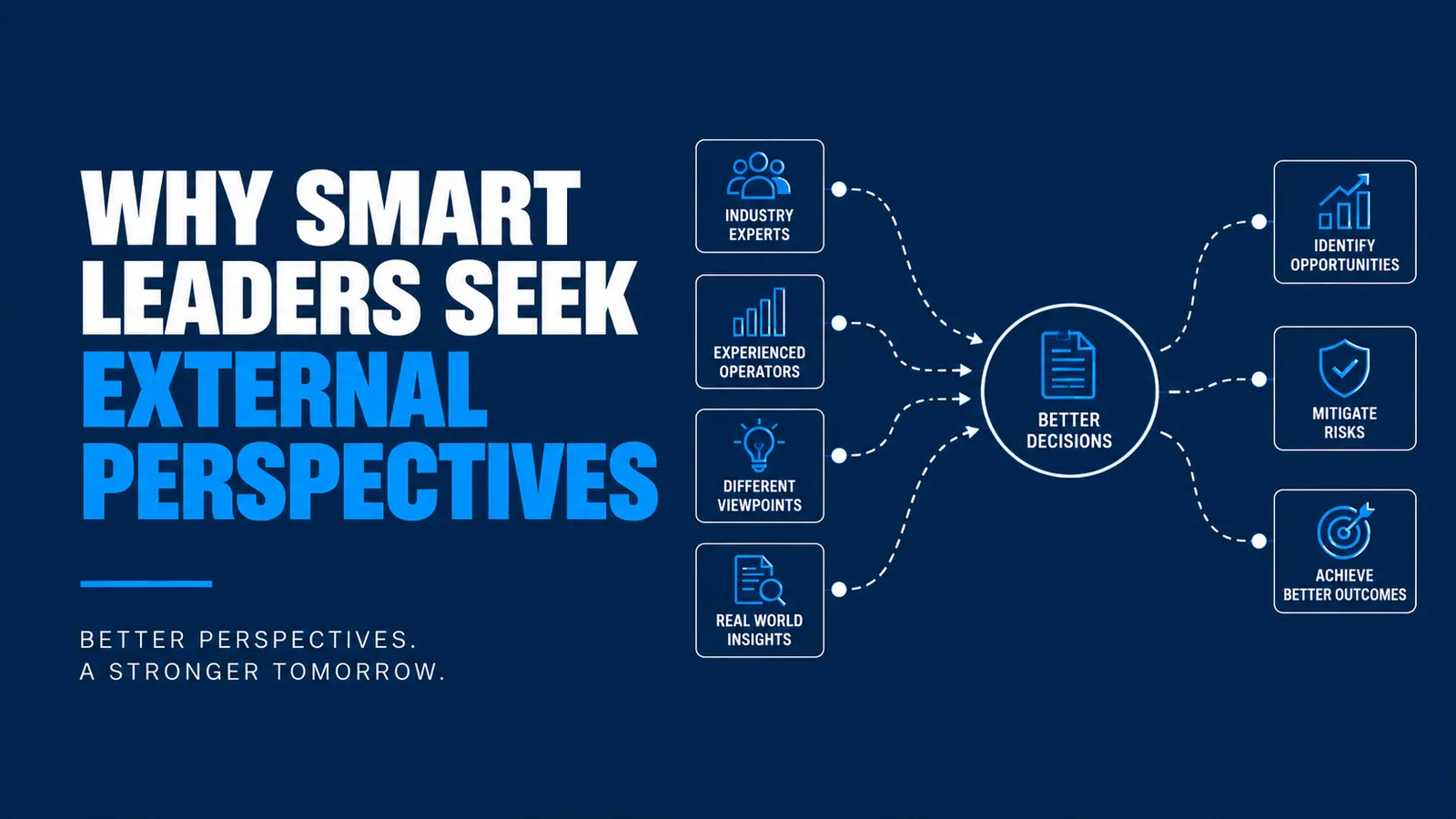
Leadership often requires making decisions with incomplete information.
A market expansion.
A pricing strategy.
A major hire.
A product launch.
An investment opportunity.
A strategic partnership.
The stakes can be high.
The uncertainty can be significant.
And the consequences can last for years.
This is why many successful leaders seek external perspectives before making important decisions.
Not because they lack expertise.
But because they understand the limits of their own perspective.
The Leadership Challenge
As leaders gain experience, people naturally begin trusting their judgment.
Teams seek approval.
Investors seek direction.
Employees seek answers.
Over time, this creates an unintended challenge.
Fewer people challenge their thinking.
Fewer people disagree.
Fewer people ask difficult questions.
The more senior a leader becomes, the easier it becomes to operate inside an echo chamber.
This is where external perspectives become valuable.
Why Internal Discussions Are Sometimes Not Enough
Most organizations develop shared assumptions.
The team understands the market.
The product.
The customers.
The strategy.
This alignment is useful.
But it can also create blind spots.
People working closely together often view problems through similar lenses.
They share the same information.
The same experiences.
The same assumptions.
As a result, important alternatives may never be considered.
External perspectives introduce fresh thinking.
They help leaders see beyond what the organization already believes.
The Risk Of Familiar Thinking
Experience is valuable.
But experience can also create bias.
Leaders naturally rely on patterns that worked in the past.
Sometimes those patterns remain effective.
Sometimes they do not.
Markets evolve.
Customer behavior changes.
Technology disrupts industries.
Competitors adapt.
What worked five years ago may not work today.
External perspectives help leaders challenge old assumptions before they become costly mistakes.
Why Smart Leaders Welcome Different Viewpoints
Many people associate confidence with certainty.
Strong leaders understand something different.
Confidence is being willing to challenge your own thinking.
Before making important decisions, they often ask:
What might I be missing?
Who disagrees with this view?
What assumptions are driving this decision?
What would an outsider see differently?
These questions often reveal risks that internal discussions overlook.
How External Perspectives Improve Decisions
External viewpoints create value in several ways.
They Challenge Assumptions
Every decision relies on assumptions.
Some assumptions are correct.
Others are not.
An experienced outsider can often identify weak assumptions immediately.
Sometimes a single question can expose a flaw in an otherwise convincing strategy.
They Reveal Hidden Risks
Internal teams often focus heavily on opportunities.
External perspectives help balance optimism with realism.
An experienced operator may identify:
Market risks
Execution risks
Competitive threats
Customer adoption challenges
Financial risks
Before significant resources are committed.
They Introduce Alternative Solutions
Many businesses evaluate only a small set of options.
External perspectives often uncover possibilities that were never considered.
Sometimes the best solution is not among the original choices.
A different viewpoint can expand the decision space significantly.
The Cost Of Not Seeking External Perspectives
Many expensive business mistakes share a common characteristic.
The warning signs existed.
But nobody challenged the decision.
Examples include:
Expanding too quickly
Hiring ahead of demand
Entering the wrong market
Mispricing products
Pursuing the wrong customer segment
Overestimating growth potential
In many cases, the issue was not capability.
The issue was perspective.
External Perspectives Are Not About Validation
One common mistake is seeking advice only from people who already agree.
That is not the purpose.
The goal is not validation.
The goal is better thinking.
The most valuable perspectives often challenge existing beliefs.
They introduce discomfort.
They force leaders to reconsider assumptions.
And they improve decision quality.
Who Provides The Best External Perspectives?
Not every opinion is equally valuable.
The most useful perspectives often come from people who have solved similar problems before.
Examples include:
Experienced founders
Business operators
Industry specialists
Former executives
Functional experts
Investors
Experience creates pattern recognition.
People who have seen similar situations before can often identify opportunities and risks much faster.
Questions Leaders Should Ask Before Major Decisions
Before making a significant business decision, consider:
What assumptions are we making?
What evidence challenges our view?
What could make this decision fail?
What risks have we overlooked?
Who has faced a similar situation before?
What alternative approaches exist?
The answers often reveal insights that internal discussions miss.
A Common Trait Among Successful Leaders
Across industries, successful leaders share a common habit.
They rarely make major decisions in isolation.
They actively seek feedback.
Challenge assumptions.
Explore alternatives.
And learn from people who have faced similar challenges before.
They understand that better decisions rarely come from having all the answers.
They come from asking better questions.
Final Thoughts
No leader has perfect information.
No organization sees every risk.
No strategy is free from uncertainty.
The strongest leaders accept this reality.
They actively seek external perspectives.
Not because they lack confidence.
But because they value clarity.
A fresh perspective can reveal a blind spot.
Challenge an assumption.
Identify a hidden risk.
Or uncover a better path forward.
Sometimes a single conversation can prevent a very expensive mistake.
About Rytmove
Business Challenges. Trusted Second Opinions.
Rytmove helps founders, startup teams, SME owners, and business leaders gain clarity on important business decisions through conversations with experienced operators who have solved similar challenges before.
Whether you're evaluating growth opportunities, reviewing strategy, assessing investments, planning market expansion, or making high-impact decisions, Rytmove helps you access valuable external perspectives and make better decisions with confidence.
Website: https://rytmove.in